
Costuming & Aesthetic Guide
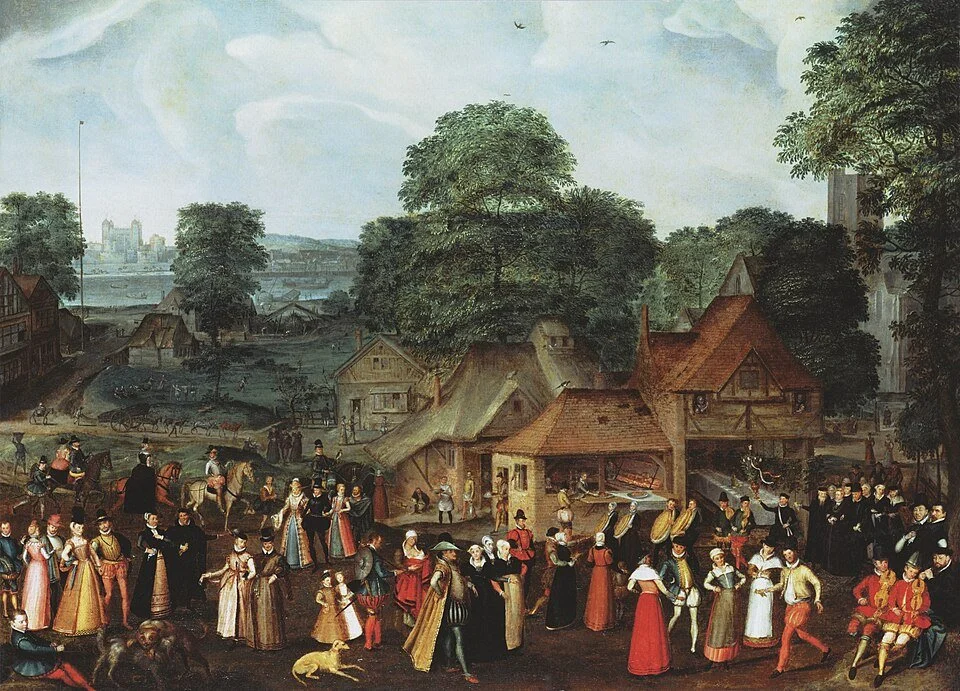
Welcome to the Elizabethan era! Our visual benchmark for this setting is heavily inspired by historical depictions of the period, such as Joris Hoefnagel's famous painting, A Fete at Bermondsey (c.1570). Expect a world filled with doublets, jerkins, flowing cloaks, and kirtles.
The Second-Hand Look: Remember that fast fashion did not exist in 1567. It was entirely common across all social classes to inherit or buy older, second-hand clothing. The rising middle class and working professionals loved purchasing out-of-style noble garments to dress for the stations they aspired to hold. Don't worry about looking pristine; a slightly worn, layered, or mismatched look fits the port town vibe perfectly. Have fun with it—100% accuracy is absolutely not expected.
The Otherworldly & Magical: Some characters in Berwick are not human. If you are playing an otherworldly being trying to blend in, your costume can reflect your character's flawed understanding of human fashion. You might wear unusual combinations, outdated elements, or have a very low-effort attempt at "fitting in." If your character doesn't care about hiding their nature, feel free to arrive in your full magical attire.
Visual Indicators: Ghostly & Invisible States
To ensure role play flows smoothly without breaking immersion, look out for these two vital costume indicators on the docks of Berwick.
The White Veil (The Corporeal Divide): A player wearing a white veil is currently a ghost in a non-corporeal form. In this state, they are completely invisible and inaudible to ordinary humans. They can only be seen or heard by members of the Silent Court unless a character sheet explicitly grants a specific mechanic otherwise.
Logistics Note: If your character unexpectedly perishes a supply of veils will be available to get you safely back into play.
The Galaxy Scarf (Unseen Interactors): A player wearing a galaxy scarf is completely invisible to the naked eye and cannot be heard. However, their physical presence can still affect the world. They are permitted to cause things to happen directly to your character or environment. You will "feel" the results of their actions. Role play the physical effects naturally as they occur, even if you cannot see the source. Unless your character sheet explicitly states you can see, hear or interact with them, they remain entirely unseen. Note: Galaxy scarves are provided by game staff in ops.
How It Works: These unseen forces will manifest their actions by either discreetly handing a printed card to a character or speaking a specific effect aloud to a group. If you receive a card or hear an effect called out by a galaxy scarf player, role play the environmental consequences naturally, even though your character cannot see the source.
THE VISUAL LANDSCAPE & ATMOSPHERIC LIGHTING
Our event utilizes a deliberate, high-contrast shift in lighting to define the play spaces across the venue. To maintain an immersive visual space, the lighting rules are split into two distinct geographical zones:
The Hall and Common Areas: The main tavern square and the immediate pathways surrounding the sleeping quarters feature permanent facility lighting, warm street lamps, and good visibility.
The Dark Forest and Waters: The second your boots leave the illuminated common areas and enter the deep forest trails the artificial lighting stops. This zone is kept in near-total pitch darkness to preserve the night sky and maximize the visibility of our hidden, glowing trail landmarks.
Please note: None of the game plots require a woods hike in the dark; this is simply an atmospheric option provided. You can absolutely wait until daylight to explore these same areas.
Lighting Kit Guidelines: Preserving the Dark
To navigate the dark forest during the night phases, players should plan their lighting around the following parameters:
The Power of Red Light: We strongly encourage the use of red-light modes on your lanterns or headlamps. Sticking to a red beam preserves your eyes' natural night vision, allows everyone to see the stunning canopy of stars, and keeps our hidden, ambient white and amber trail props highly visible in the dark brush.
The Gear: It is completely fine if all you have is a standard, modern headlamp. However, bonus points are awarded if you can incorporate your light source into a prop lantern or mask your device to blend with your costume.
Out-of-Character (OOC) Safety Backups
While we honor the dark atmosphere of the woods, real-world safety is always our first priority.
The White-Light: Every player must carry a standard white-light headlamp or flashlight on their person (in a pocket, pouch, or bag) as an OOC backup. Cell phones do not count.
Use It If You Need It: If you worry about footing, lose an item, navigate rough terrain, or experience a real-world emergency, flip your white light on. No one will complain. Safety comes first, and the rules will never penalize a player for protecting themselves or others.
Minimize and Mask: If you aren't using your white light for an active safety or navigation need, please try to minimize its use to help protect the dark atmosphere of the forest. If you can dress up your white-light flashlight to look like an in-game prop, that is highly encouraged too but never mandatory.
Recommend Costuming Resources:
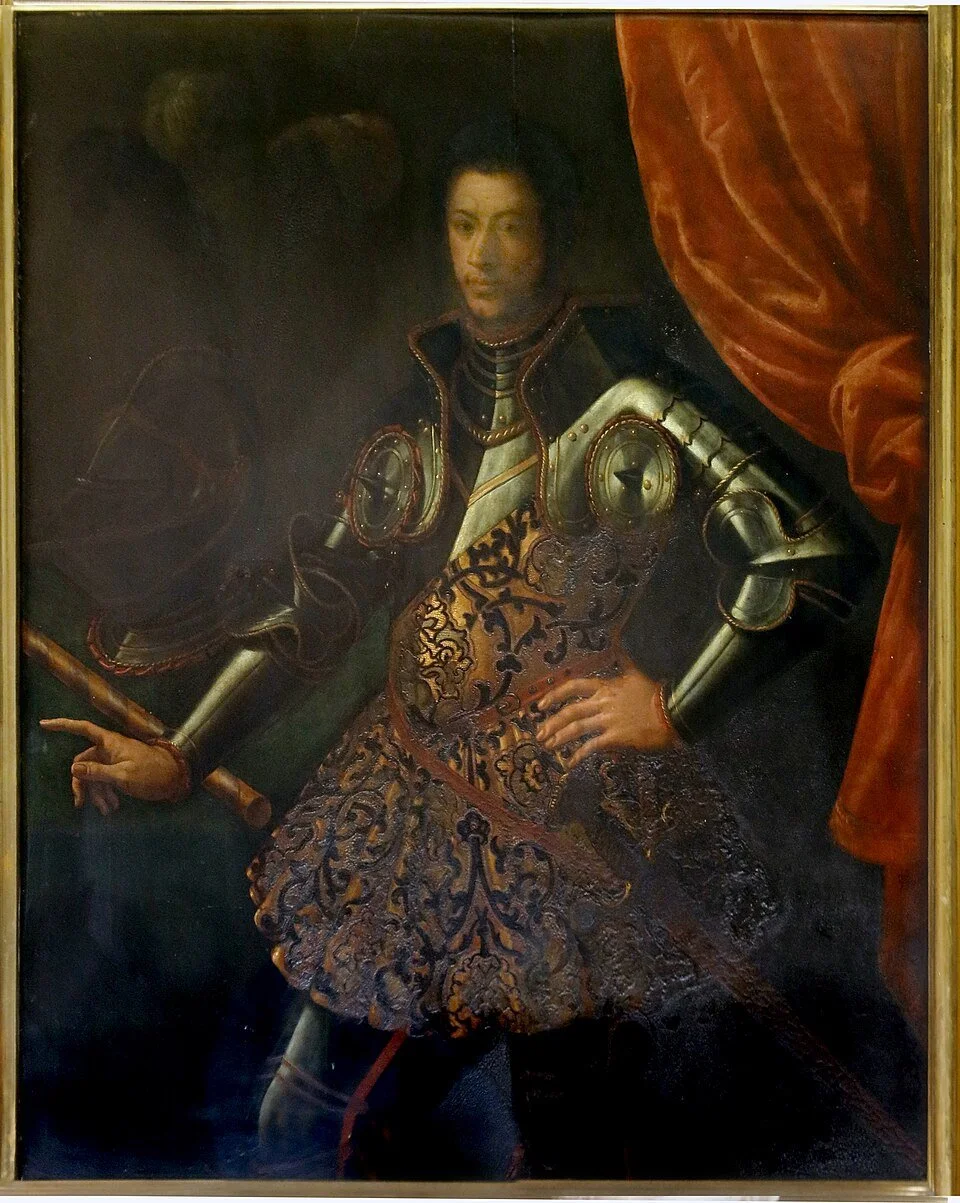
Girolamo Macchietti, Alessandro de' Medici, duca di Firenze, 1585.
To help you assemble or construct your outfit, we highly recommend utilizing these specialized patterns and historical guides:
The Web: Explore the Elizabethan Costuming Page for comprehensive, free historical fashion articles, pattern diagrams, and construction tips.
Advanced Pattern Drafting & Tailoring: Check out the masterclasses and tailoring guides on The Modern Maker Schoolhouse. For physical reference material, independent bookstores offer copies of Mathew Gnagy's expert tailoring manuals—such as Vol. 1 on Men's Doublets or Vol. 2 Pattern Manual—directly via Bookshop.org. You can also look up the iconic Patterns of Fashion books by Janet Arnold.
English Style: Browse The Tudor Tailor for specialized patterns and academic books detailing the exact daily clothing of 16th-century England.
International Flair: For characters traveling from the continent, consult Moda a Firenze 1540-1580 to capture authentic Mediterranean styles.
